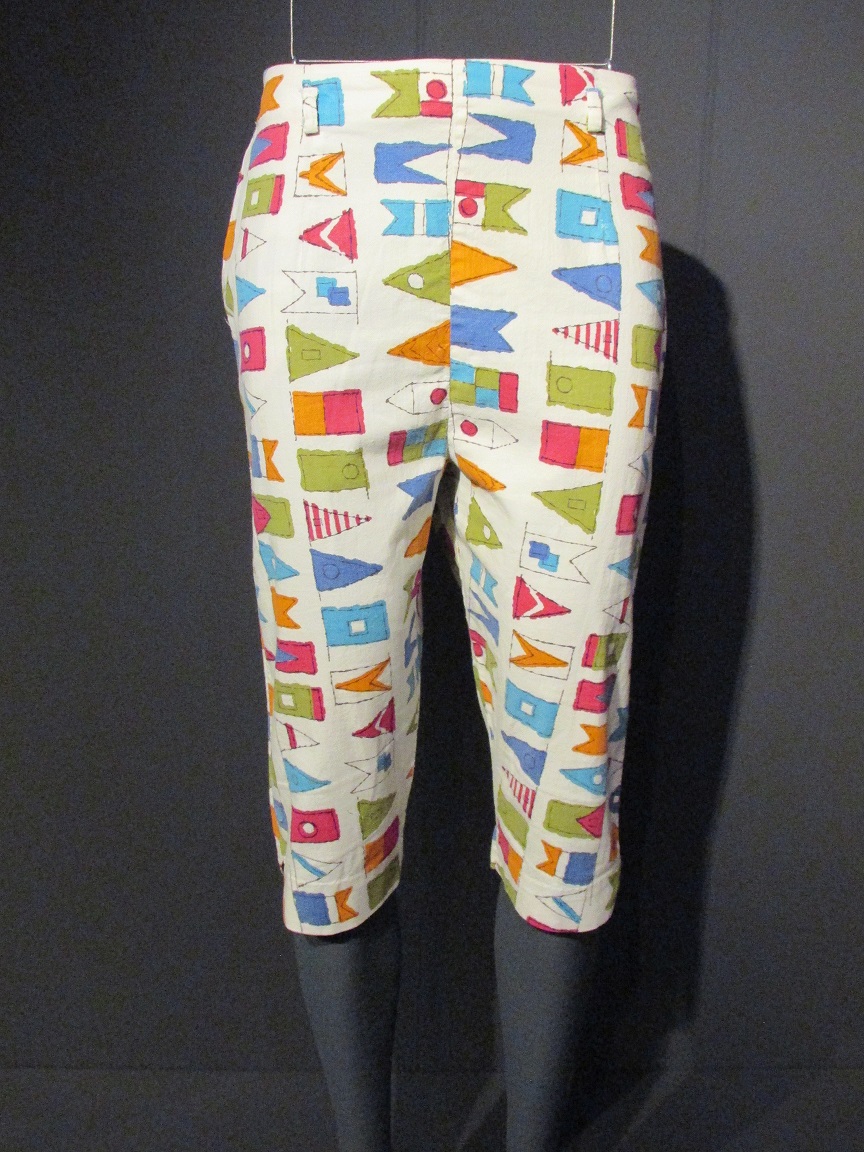
Like Andy Warhol I began my career in art as a freelance illustrator. Warhol trained at the Carnegie Institute of Technology in his hometown of Pittsburgh. He arrived in New York in in 1949 and began producing popular fashion and advertising illustrations as well as gift-wrap and greetings cards. Some of these designs were adapted and the licences sold to textile manufacturers in New York's garment district from the mid 1950s. Warhol saw artistic and decorative potential in mundane objects very early in his career. He had a notorious sweet tooth. His favourite food were desserts, and he would eat pudding and ice creams at his favourite cafe - Serendipity in New York. Warhol's fondness for desserts found its way into his drawings and designs for textiles. These designs also featured different everyday motifs such as buttons, butterflies, flags, luggage labels and shoes repeated in his signature illustrative style and would be produced in different colourways. Warhol's illustrative style was to draw in ink onto tracing paper which would then be pressed onto absorbent paper creating ink distinctive drawings with a heavy, blobby, broken outline which he would then apply watercolour to. Although considered a lesser art form than fine art painting this use of everyday motifs/products repeated with slight variations mass produced in different colourways was key to, and prefigured the Coca-Cola bottle and Brillo boxes Warhol created in the assembly-line production in his Factory studio in his later work as a 'fine artist' and part of the Pop Art movement. This exhibition at the Fashion and Textile Museum is the work of collectors of 20th century design Geoffrey Rayner and Richard Chamberlain who have put more than 60 of their personal collection of Warhol textiles on display, many of which are being exhibited for the first time. As Warhol sold most of his designs to textile manufacturers anonymously the pair went through years of exhaustive research trawling archives, researching textiles manufacturers as well as records from Warhol's friends and associates to authenticate the designs. The fabrics bearing Warhol's designs would be transformed into garments by individuals or boutiques making these items quite unique. Visitors to the exhibition get a sense of history and journeying back in time looking at the vintage dresses and clothing exhibited, as the silhouettes of the garments are definitely of the 1950s/1960s period and as such naturally evoke a certain nostalgia. Chamberlain and Rayner have done some great detective work in tracking down obscure fabric designs from this least known and overlooked aspect of Warhol's oeuvre. There must surely be further designs just waiting to be discovered.




Andy Warhol: The Textiles
until 10th September
Fashion and Textile Museum
83 Bermondsey Street
London
SE1