I had walked past 14 Cavendish Square and it's twin counterpart on numerous occasions when living in Westminster. Number 14 is one of four mansions in the square built by Sir George Foster Tufnell in 1770. It is a Grade II listed building in the Palladian style with a magnificent façade clad in Portland stone boasting a grand order of Corinthian pilasters beneath a matching pediment facing directly onto the square. I was always struck by Jacob Epstein's large, 1950s Madonna and Child statue installed on a bridge linking the two buildings. It looms out at you, appearing to "levitate" above the mews entrance. Epstein's sculpture is created from three tons of the lead of the roof of number 14 when the property sustained bomb damage in World War II. I recently took the opportunity to visit and explore the interior of number 14 with this current joint venture by Stephen Friedman Gallery and The London House of Modernity. The collaboration brings together the world of contemporary art and classic midcentury Nordic design in this impressive Georgian mansion. Mid-century furniture, design and textiles has been the stimulus for elements of my newer work (here, and here), so I was determined to experience these industrial design classics first-hand. Despite the graceful proportions of the large rooms, the interior of the building is now a mere shadow of its grand, former self, denuded of the majority of its original features, and now in a state of near dereliction. The building is most definately in estate agents parlance "a fixer-upper". The bare bones of the property in this state of disrepair however provides a stark contrast and ideal backdrop in which to view the modern art and design currently installed. It felt like a real privilege to be afforded this rare chance to walk through these rooms, to try to envision in my minds eye the lives lived of those occupants who had previously inhabited this building. The births, marriages and deaths encapsulated within the fabric of this space. The disparities of wealth between the well-to-do owners against those who served them, the differences in lives lived above and below stairs. I
wondered about the activities and occasions these walls bore witness
to, formal entertaining, perhaps balls and dances, as
well as the more mundane, but necessary chores which form a
part of everyday life. Yinka Shonibare's figures installed here helped with these musings, as they stand on the sidelines sporting period costume, attendant, waiting quietly in the corners of the rooms. Number 14 sadly, is currently being touted for development as offices. Exhibitions in empty, near-derelict important buildings are always exciting, providing a chance to finally gain entry to classic architecure usually inaccessible to the public. Previous examples of similar ventures were experienced on visits to a Burberry fashion installation at the Old Sessions House, Clerkenwell, here, and Lisbon's Design Museum housed in the stripped innards of an old bank, here. In all cases the basic, austere, interiors of the buildings proved to be as fascinating as the art, design and fashion temporarily displayed inside them.


Jacob Epstein - Madonna and Child, 1950-52
Arne Jacobsen - Egg Chair for Fritz Hansen, 1958
Jim Hodges - Untitled (Landscape V), 2000-2001
Josef Frank - Flora cabinet on stand for Svenskt Tenn, 1937
Marina Adams - Three Witches of the Night, 2020, Stardust, 2020 paintings
Björn Trägårdh - Easy chairs model 151 for Svenskt Tenn, 1930s, Bruno Mathsson - System shelving #42, 1952,
Yinka Shonibare CBE - Wounded Amazon (after Sosikles), 2019
Yinka Shonibare CBE - Wounded Amazon (after Sosikles), 2019, (detail)
Börge Mogensen - Sleigh chair and footstool, 1953
Hans Wegner - Chairs for Johannes Hansen, 1960s
Ilona Keserü -June Variation series, 1976
Finn Juhl - Chieftan armchair for Niels Vodder, 1949, TH Valentiner - Floor Lamp for Poul Dinesen, 1960s
Artwork - Ilona Keserü - Saturated Accord, 1976, Börge Mogensen - Library table for Erhard Rasmussen,1954, Lisa Johansson-Pape - Table Lamps for Orno, 1940s
Börge Mogensen - Library table for Erhard Rasmussen,1954, Lisa Johansson-Pape - Table Lamps for Orno, 1940s
Kendell Geers - Age of Iron CV, 2012
Wayne Gonzales - Woman in the Garden, 2016
Andreas Eriksson - Content is a Glimpse #36, 2014
Ole Wanscher - Colonial sofa and armchairs, PJ 149 for P. Jeppeson, 1949/60s
Mamma Andersson - The Weakening Eye of Day, 2017
Ole Wanscher - Colonial armchair, PJ 149 for P. Jeppeson, 1949
Surviving original cornicing
Ole Christensen - Rain, ceramic sculpture, 1950s
Mamma Andersson prints, Josef Frank - Sideboard for Svenskt Tenn, 1950s
Finn Juhl - Sofa for Niels Vodder, 1943
Ged Quinn - Eleven Breaks of Blind, 2017
The view onto Cavendish Square from the first floor
Uno Ullberg - Dining set for Hangö Ångsåg & Ångsnickeri AB, 1905
Yinka Shonibare CBE - Un Ballo In Maschera (Courtiers II), 2004
Uno Ullberg - Cabinet for Hangö Ångsåg & Ångsnickeri AB, 1905, Chair in the style of Jean Royère, French, 1940s, Axel Enoch Boman - Table Lamp for Orrefors, 1915
Ged Quinn - Today is Our Meatless Day, 2013
Yinka Shonibare CBE - Un Ballo In Maschera (Courtiers II), 2004
Ged Quinn - Your Most Urgent Prayer, 2012
Mirror artwork -Jim Hodges - Untitled (Split), 1997, Uno Ullberg - Cabinet for Hangö Ångsåg & Ångsnickeri AB, 1905, Chairs in the style of Jean Royère, French, 1940s Yinka Shonibare CBE - Un Ballo In Maschera (Courtiers II), 2004
Yinka Shonibare CBE - Tapestry series
Alvar Aalto - Shelf for Hedemora, 1933
Juan Araujo - Azul Series paintings, 2003
Alvar Aalto - Small Paimio armchair, Artek, 1930s
Yinka Shonibare CBE - Un Ballo In Maschera (Gustav III and Anckarstrom), 2004
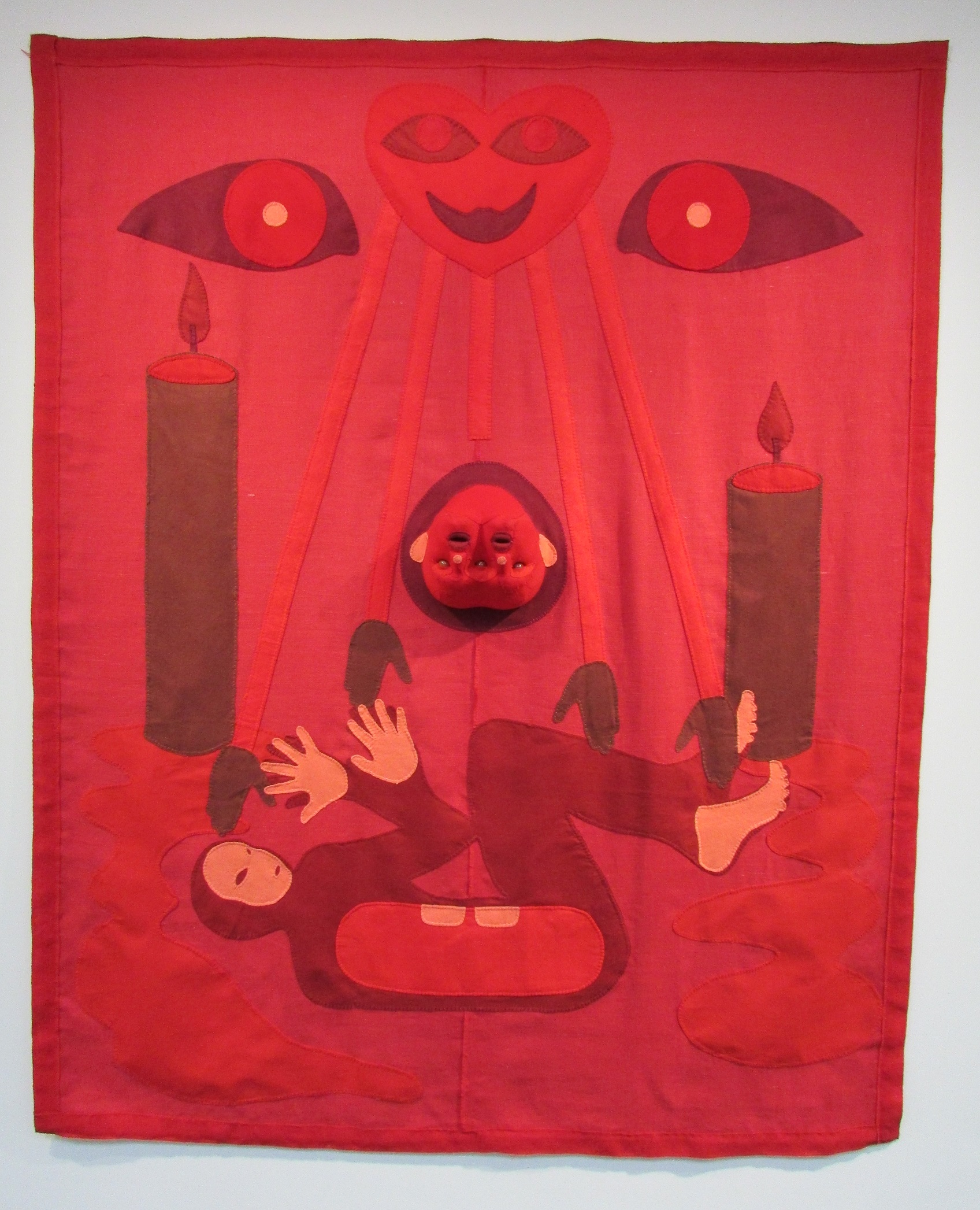
Jonathan Baldock - love the skin you're in, 2020
Jonathan Baldock - love the skin you're in, 2020 (detail)
Tonico Lemos Auad - Red Figure, 2019 and The World is Black as Ink, 2019
Jonathan Baldock - Mask Series
Jonathan Baldock - Mask V, 2018
Jonathan Baldock - Mask LI, 2018
Ilmari Tapiovaara - Ceiling Lamp, 1955
Hans Olsen - Modular TV bench model 161 for Bramin, 1957
Per B Sundberg - Fabula vases for Orrefors, 2003
Ivar Callmander - Armchair, 1920s
Paavo Tynell - Table Lamp Model H5-8 for Idman, 1950s
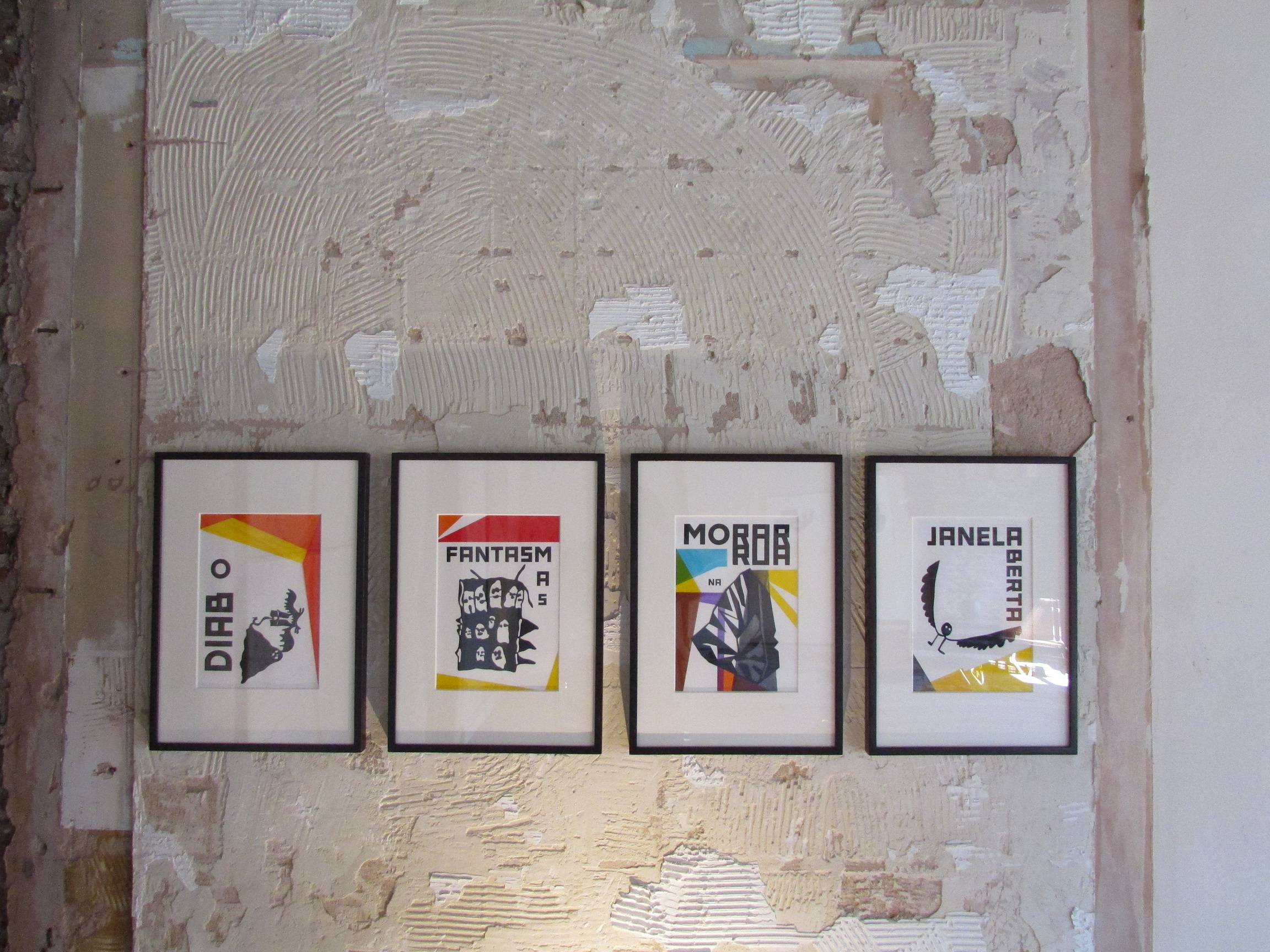
Rivane Neuenschwander - O nome do medo (recorte): Morar na rua / The Name of Fear (cut out): Live on the Street, 2017
The attic window and the view through it onto Cavendish Square
The bare bones of the attic space
Peter Hvidt and Orla Mölgaard Nielsen - six armchairs for Söborg, 1960s
Poul Kjaerholm - Daybed PK80 for E. Kold Christensen, 1957
Eva and Nils Koppel Armchair for Slagelse Mobelverk, 1950s and Mogens Lassens Egyptian Table for Rud Rasmussen, 1935 Anonymous long case clock, 1950s
Bruno Mathsson - Bench for Karl Mathsson, 1960s, and Stig Lindberg vase, 1965
Stephen Friedman Gallery at the House of Modernity
until 28th May
14 Cavendish Square
London
W1