Sunday, 14 July 2024

Jack Pierson

Jack Pierson - YOU ARE THE SUN, 2024


Artist Jack Pierson is well known for his sculptural typographic installations, and it was certainly these that brought his work to my attention initially. The wood and metal letters are salvaged from a variety of commercial sources both vintage and new, and are arranged in a mixture of differing fonts and font sizes both upper and lowercase. The results are pleasingly jarring visually, like collaged ransom notes. The first typographic sculpture installed in the exhibition is titled Peter Blake (2024), and is named after one of Britain's very own leading artists who came to prominence in the 1960s during the Pop Art explosion. Interestingly Blake known for his love of typography and the inclusion of it in his paintings as well as his graphic design commissions, references and pays homage to Pierson and his art in a series of his own typographic artworks entitled Appropriating Jack Pierson, sparking an artistic dialogue and friendship between the two artists. States Blake, “These pieces are my nod of appreciation, a way of saying thank-you to artists whose work I like. It began with Appropriating Jack Pierson. I liked Pierson’s work and wanted one for myself, so decided to make my own”. In this exhibition you can clearly see the influence Blake's Pop collages have on Pierson in the large collaged pieces such as MALE/FEMALE ARRAY. They are homages to Blake's collaged works which similarly reference film and pop stars of the past, and anonymous models adopting beefcake and cheesecake poses. I liked these large, densely layered collages as they are an element of Pierson's work I was unaware of. Like Blake, Pierson is clearly a huge fan of pop culture, and he references film and music stars of the past and present. I was also unaware of Pierson's photographic output with which he gained prominence in the art world along with other documentary photographers of the Boston School like David Armstrong, Philip-Lorca diCorcia, Nan Goldin, and Mark Morrisroe. The photographs here are mostly male nude studies and for the most part seem seem to be about repetition in what is I suppose another nod to the Pop Art movement and namely the art of Andy Warhol. This is Pierson's first UK show in 20 years and makes for an interesting addition to the art scene here.


FEMALE ARRAY, 2024


MALE ARRAY, 2024


PETER BLAKE, 2024

YELLOW ARRAY, 2024


Study, Stacked Heads (Noah), 2024

A FRIEND, 2024


Study, Side by Side (Noah), 2024

A PILL BITTEN IN HALF, 2024

Study, Black & White and Colour (Matt), 2024

NOSTALGIA, 2024

Study, RGB/CMYK (Jack), 2024

Installation view

Installation view

Billy, 2020

DRAWING ARRAY, 2024

Cosmic Reckoning, 2023

Sigil (Lucian), 2024

Sigil (Leonardo), 2024

Sigil (Jules), 2024

Sigil (Reece), 2024

Sigil (Zaher), 2024

Installation view

IDEAS, 2023


ROOM FOR ANGELS, 2024

Everything you ever wanted, 2012


THANK YOU, 2024


Jack Pierson
until 3rd August
Lisson Gallery
67 Lisson Street
London

Sunday, 7 July 2024

Euan Uglow

Euan Uglow - Curled Nude on a Stool, 1982-83


“I take measurements so that the subject has a real link to the rectangle; it also gives me freedom to make a whole surface… I’m painting an idea not an ideal. Basically I’m trying to paint a structured painting full of controlled, and therefore potent, emotion.” – Euan Uglow


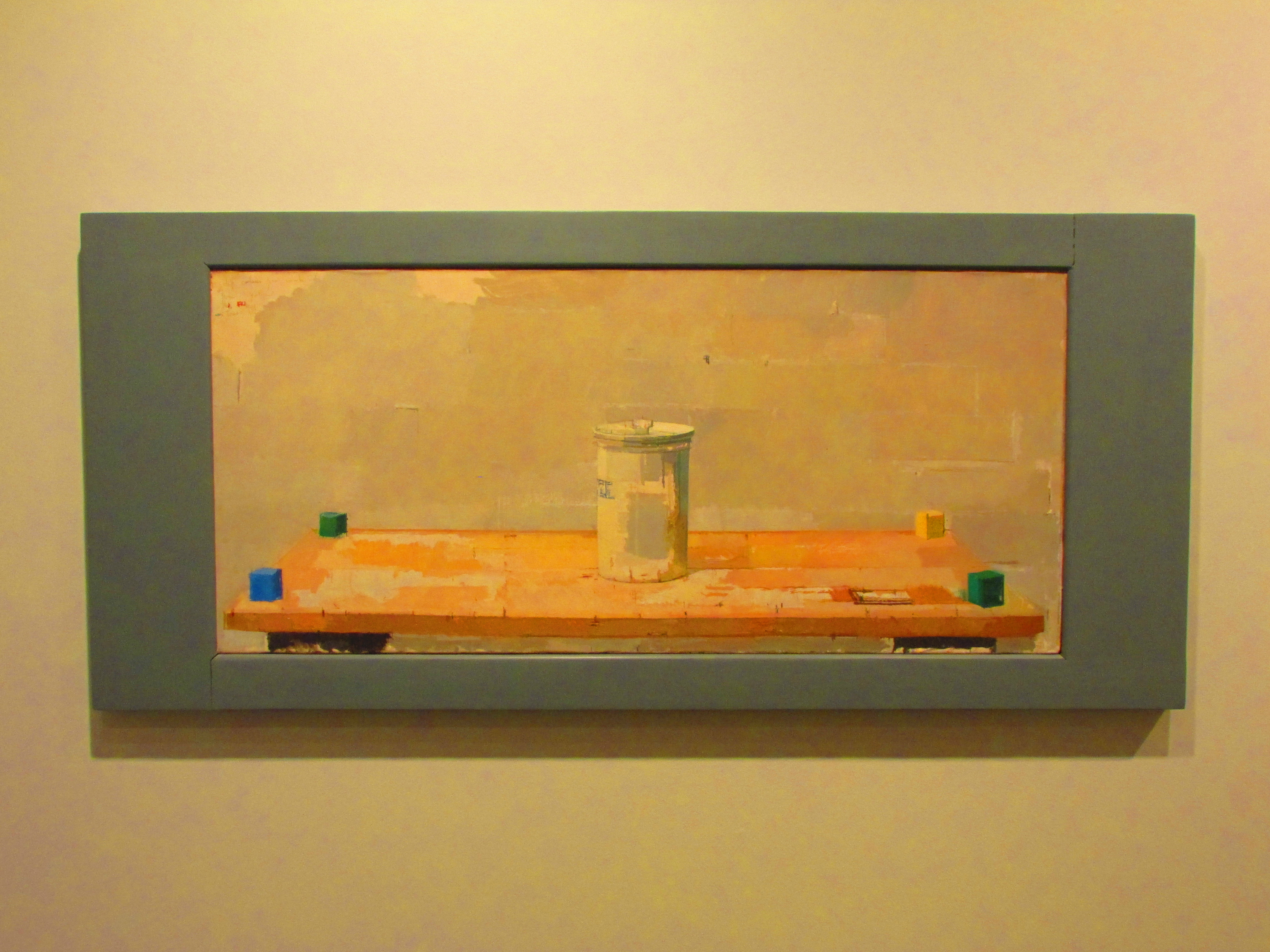
Another gem of an exhibition staged at Hazlitt Holland Hibbert in St James's.  On this occasion a posthumous retrospective of keenly observed figure studies, still lives and drawings by Euan Uglow (1932-2000). At the age of 29 Euan Uglow staged his first solo exhibition as an artist in 1961 at the Beaux arts Gallery, and The Times wrote: "The cool, blond tonality of Mr. Uglow's paintings, his concern for space and volume, and above all the judgement which makes of each portrait, still-life, or nude a sum of precise calculations, carry a very real distinction of their own." Uglow was a student of William Coldstream (1908-1987), and adapted Coldstream's rigorous working methods of measurement. Working strictly to a grid system in the studio Uglow used plumb lines and sighting strings as spatial reference points for both his paintings and drawings. You can still see the presence of the grids in his finished artworks. The act of drawing is, or at least should be, a vital part of every artists practice. The discipline of looking, and then looking again before committing to the process of putting pencil to paper and mark-making ought to be central. “Drawing is the most immediate way of making your ideas, sensations, and information explicit”, the artist has been quoted as saying. Uglow's drawing is both exhaustive and exacting. It must have been quite an ordeal for his sitters to endure given some of the poses the artist put his models through. The results were well worth the effort though, as this exhibition confirms. When juxtaposed against certain props the bodies become almost architectural in form. These figurative parts of Uglow's oeuvre make sense of the phrase 'the architecture of anatomy'. I particularly like the painting Nuria in which the model lies prone, slumped dramatically over a stool, humorously emphasising the shape of the furniture. A distinctive feature of Uglow's work are the tick marks he uses to demarcate the surface and define the forms of the figures and objects in his paintings. It is interesting that he chose to retain these marks along with traces of the drawn grids in the finished paintings as part of his signature style. Composition is a strong point with Uglow. The elements in the paintings here are so beautifully organised as a result of his looking so closely at his subjects and then solving the problems of their arrangement, whether they be intimate, little still lives or his larger figurative paintings. There is usually an element of tension created, especially in the smaller still lives by placing say a plant off-centre, or including an odd corner of a surface plane, or band or block of contrasting colour which serves as a device to lift or enliven the composition. Another aspect of Uglow's art which I think is often overlooked is just how good a colourist he actually is. The colours usually work in close tonal harmonies, or juxtapose vivid primary colours that shine like jewels against the more neutral flesh tones of the figures. Although Uglow painted in flat colour planes, they perfectly describe the play of light on the forms in the paintings in a precise, geometric way giving a solid, sculptural effect to the objects. The colours give a sense of animation and relief to the studied seriousness of Uglow's drawing technique. This was a really well curated retrospective which serves to illustrate why Uglow deserves to be held in as much esteem as his contemporaries such as Lucian Freud and Francis Bacon.


The Blue Towel, 1982

Marigold, 1969

Articulation, 1993-5

Zoe, 1987-93

Yellow Dress, 1993-8


Still Life, 1969

The Diagonal, 1971-77


Polygons, c.1970

Nectarine, 1998


Still Life with Honeysuckle, 1968


Mosque at Ciftlik Koyou, 1966

Evening Light at Yesilirmak, 1985

Skull, 1994-7


Root Five Nude, 1974-75


Shrunken Tangerine, 1988

Is it a Tart, or is it Ayers Rock?, 1998

Curled Nude on a Stool, 1982-83

Propeller, 1994-95

Stop-Start-Stop, 1991


Nuria, 1998-2000

Narcissus on Yellow Background, 1978


Passionate Proportion, 1964

Obelisk, c. 1970


Euan Uglow
until 19th July
Hazlitt Holland Hibbert
38 Bury Street
St James's
London
SW1Y