Georgina Maxim - Back to the end 2
‘It’s a constant in and out feeling much like how the needle and thread seem to create that very motion - in and out. The works are varied, each representing a time of search within the material and a chance to copy myself out onto the material. It’s as if sewing over and over again is a good deed to the heart. With the hope that the heart will reward me with the clear vision of this woman, my mother.’ - Georgina Maxim.
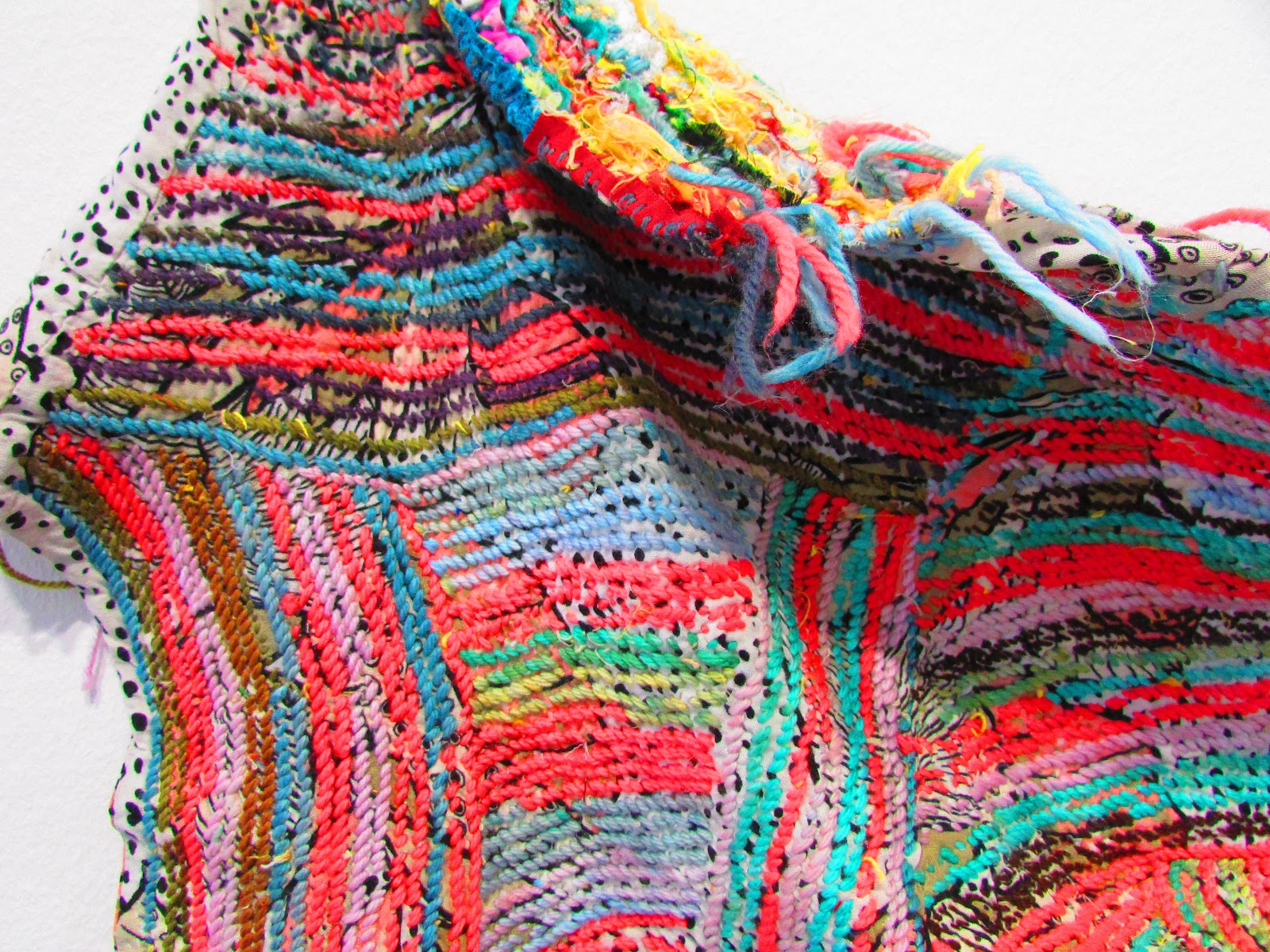
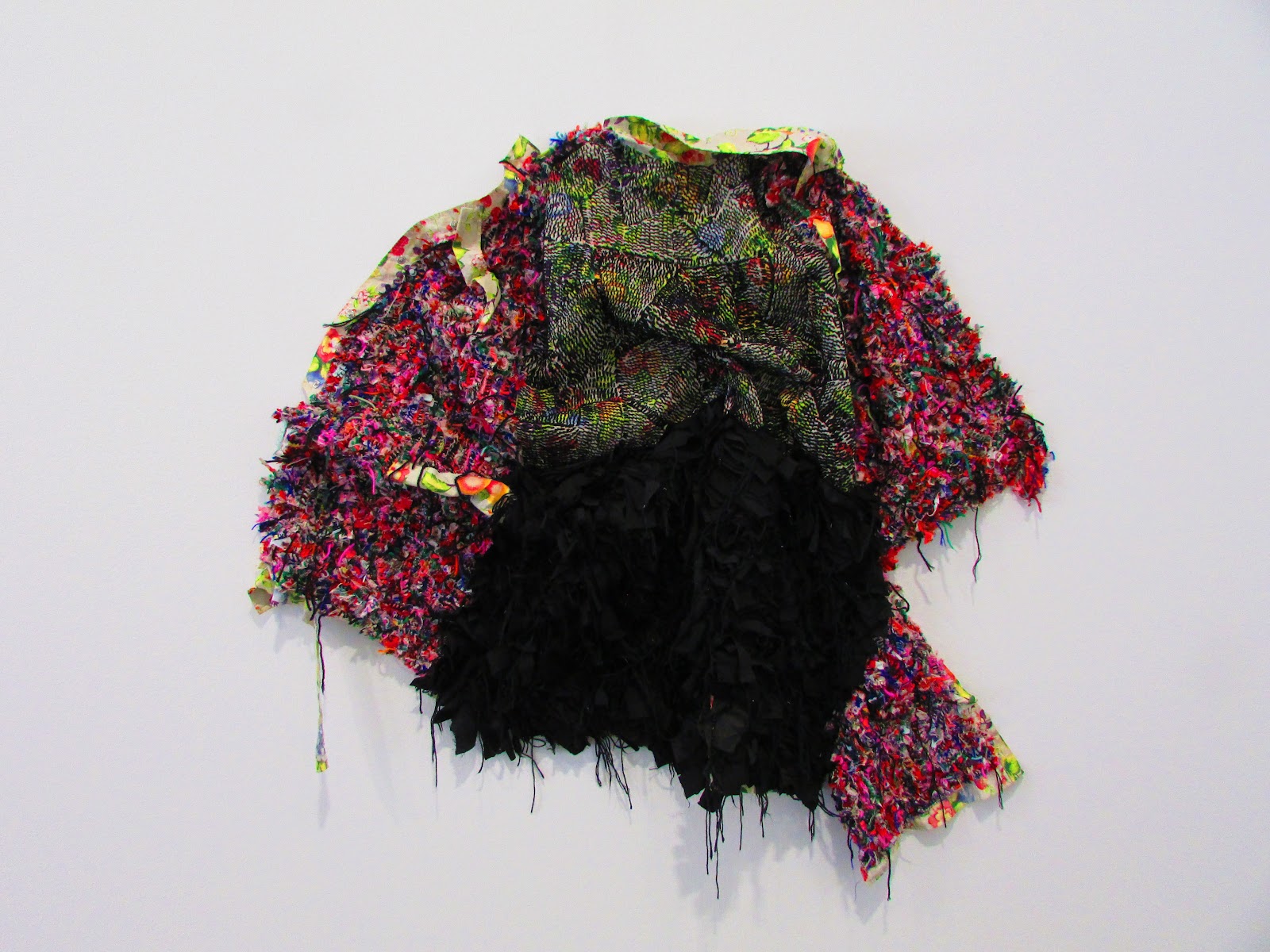
I was drawn to this exhibition at Goodman Gallery as it featured artists working in mediums which really pique my interest. On the ground floor level was Zimbabwean artist Georgina Maxim who presented a series of textile pieces embellished with a range of techniques such as applique, weaving, knitting, crochet and embroidery work which were presented unframed on the gallery walls which made them seem a little like washing hung out to dry. Maxim appears to be more concerned with the actual process of her practice, relishing the physicality of the needle piercing the thread repetitively and the patterns and marks made, rather than any defined, or stylised outcome. The works were all the more refreshing for this. The style of sewing used by maxim is called dhunge mutunge in Shona, and has been used generations to temporarily mend torn items and is also seen as a stitch for closing scars. Maxim sees stitching as a healing and meditative act with the repetitive motion of sewing enabling her to focus her attention and process trauma. The work is a response to Maxim's upbringing and her experience of being raised by her grandmother, who she thought was her mother. Maxim's natural mother passed away when she was three years old, and she views her work as an attempt to process the loss and search for the mother she never had. In Shona culture textiles carry the memory of a person. When a person dies their belongings are given to relatives. I thought that the pieces here would not have looked out of place at the excellent Barbican exhibition devoted to the art of textiles staged earlier this year - Unravel: The Power and Politics of Textiles in Art, (here), and revisiting my photos from the exhibition I found that an example of Maxim's work was indeed included in that very same exhibition.
Dear Fesmeri and Mareni, The Dress Doesn't Fit, 2022 (exhibited at Unravel: The Power and Politics of Textiles in Art, Barbican Centre)
Back to the end 2, (detail)
They are both good and bad
Untitled
Installation view
Untitled
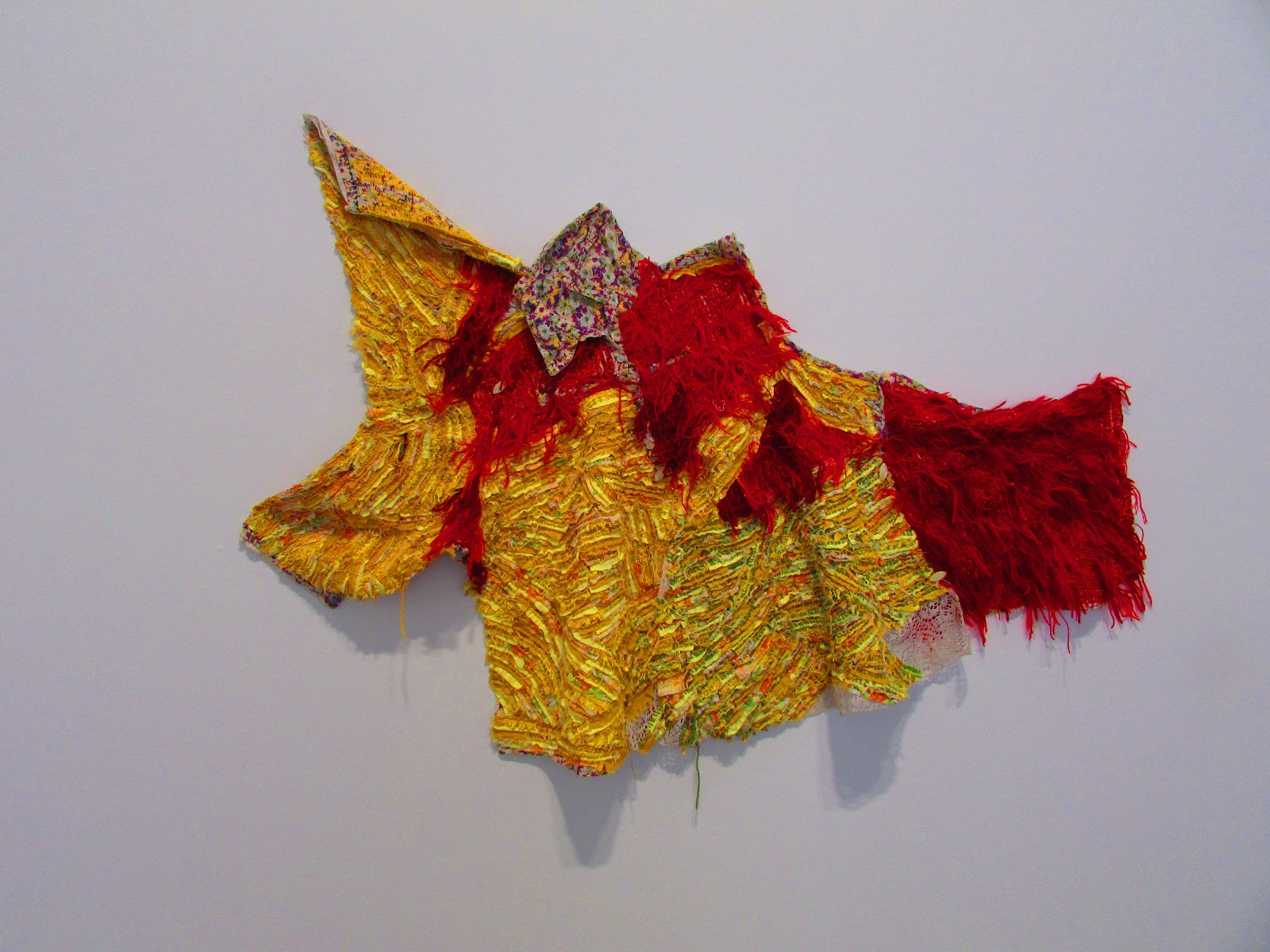
The whole place will become a memory
Mother says it is my turn with the serotonin II
Vibha Galhotra - Climactic Whispers
Vibha Galhotra - Wounded Series
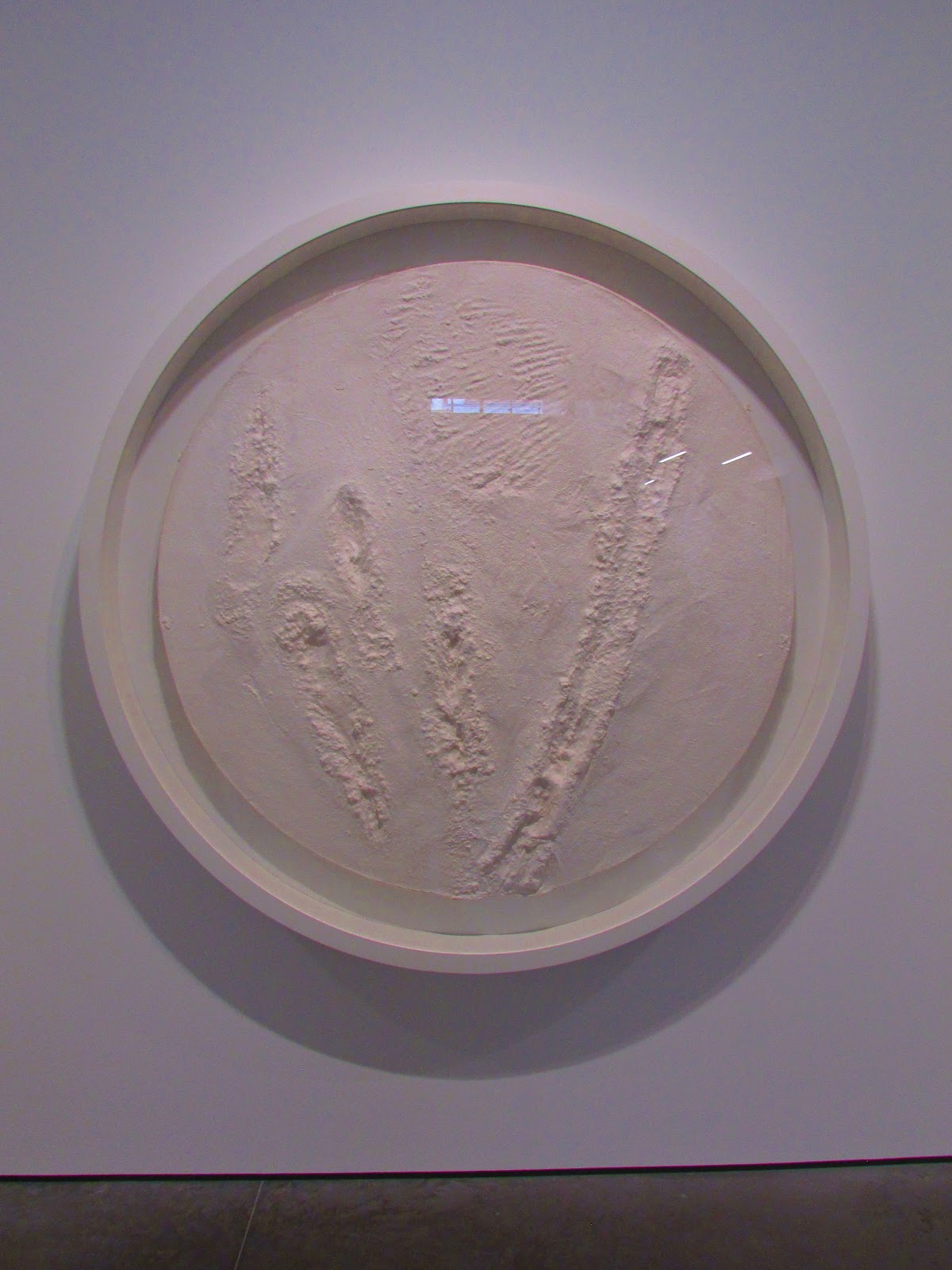
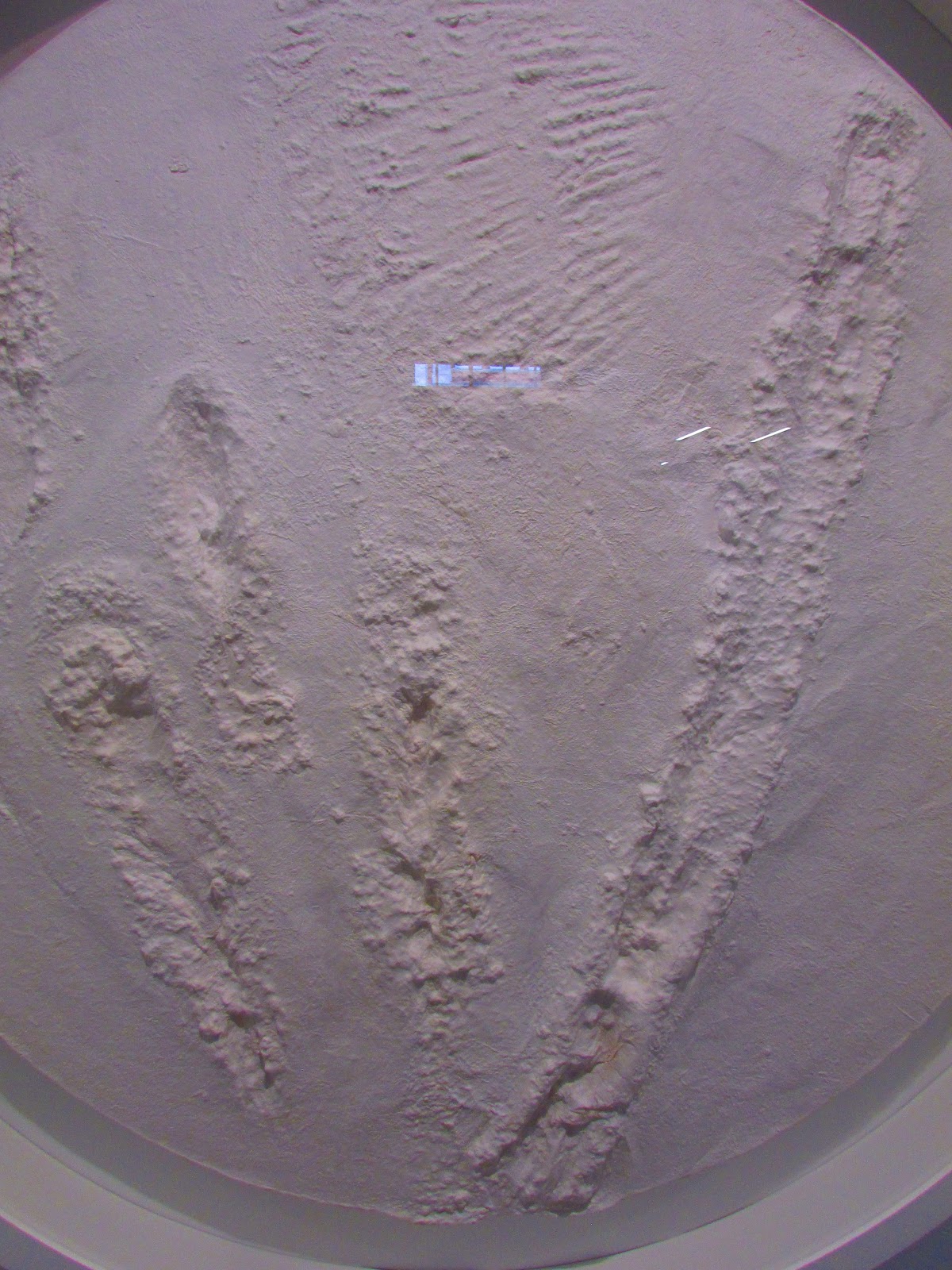
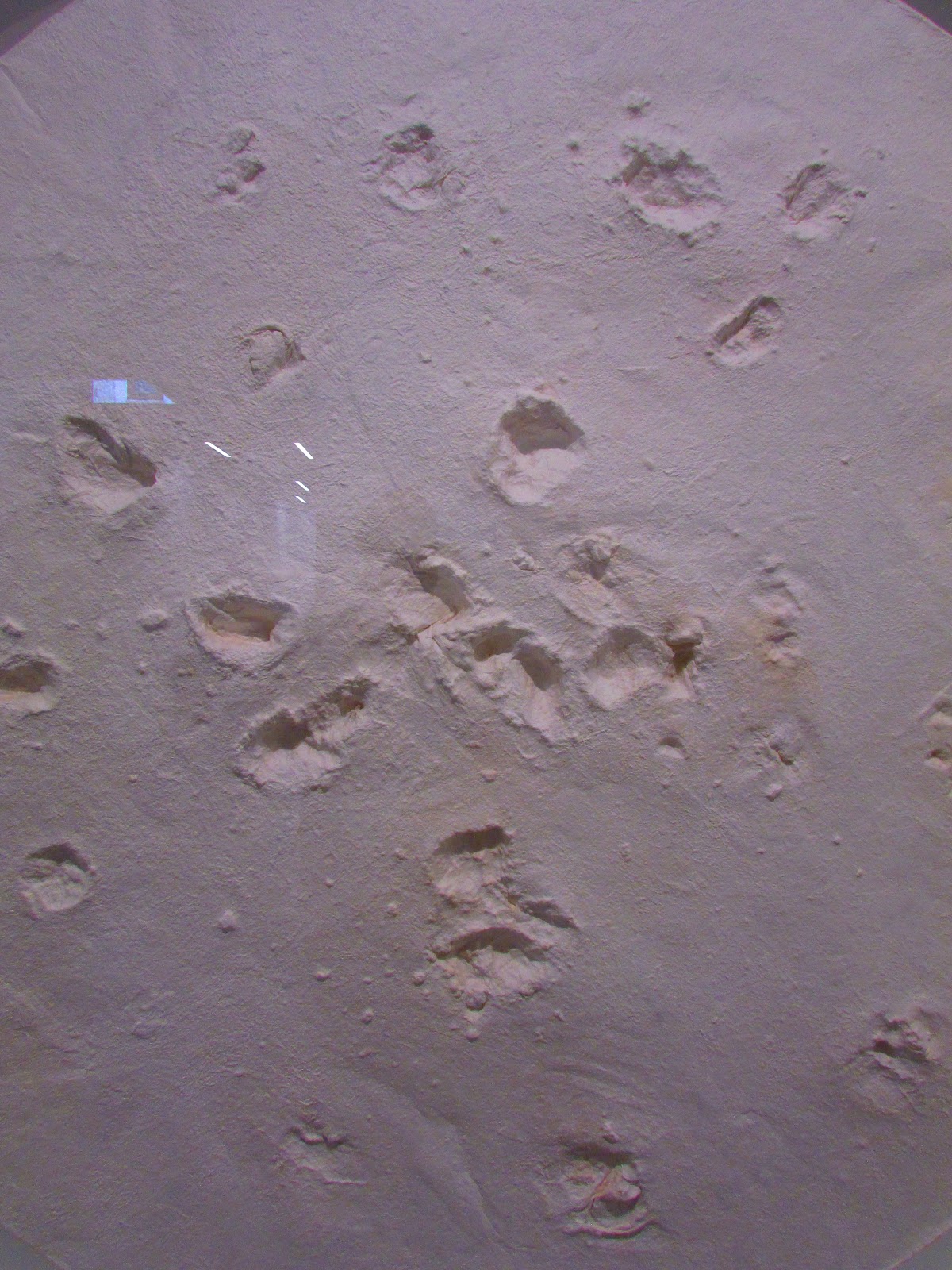
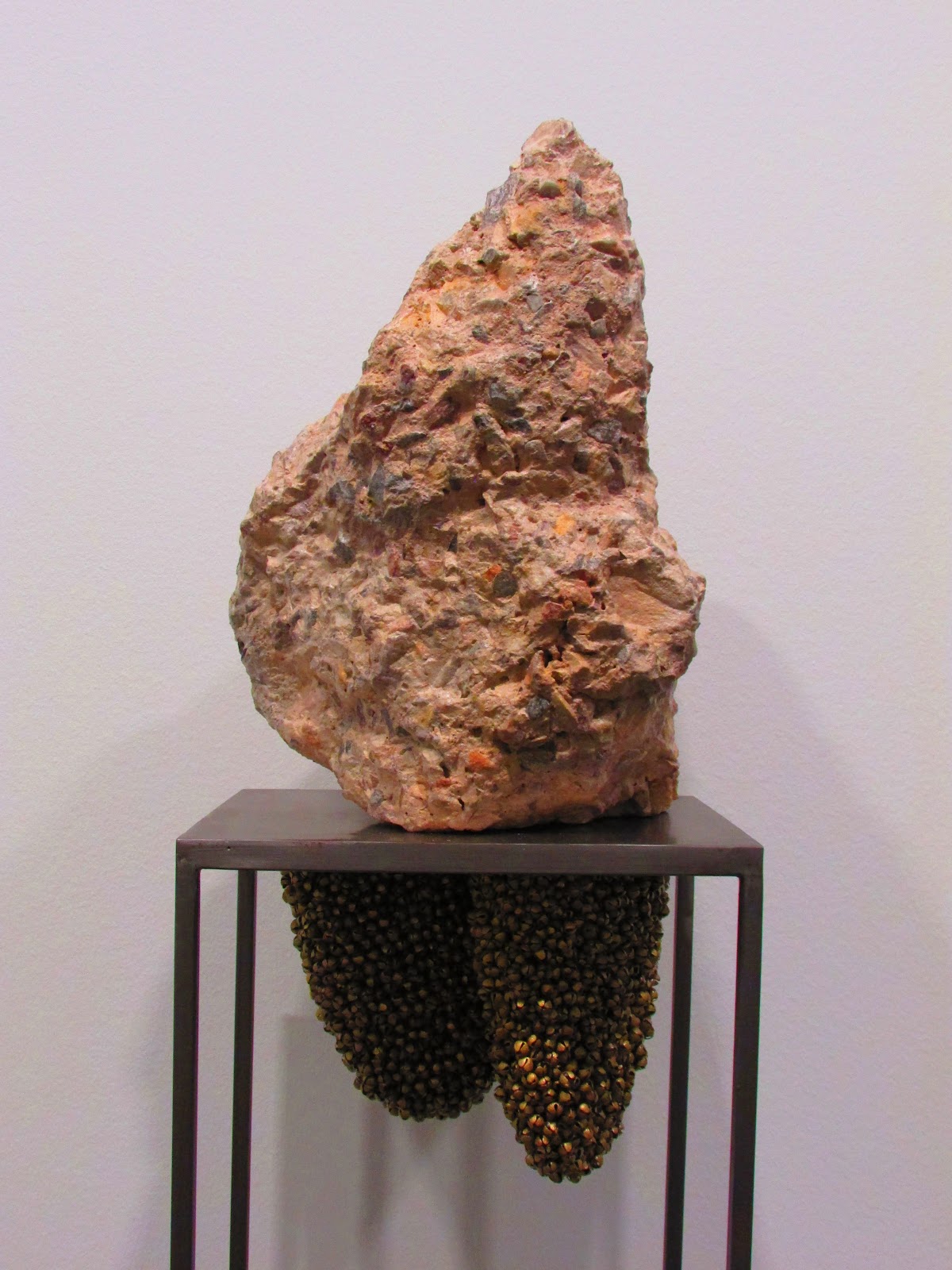
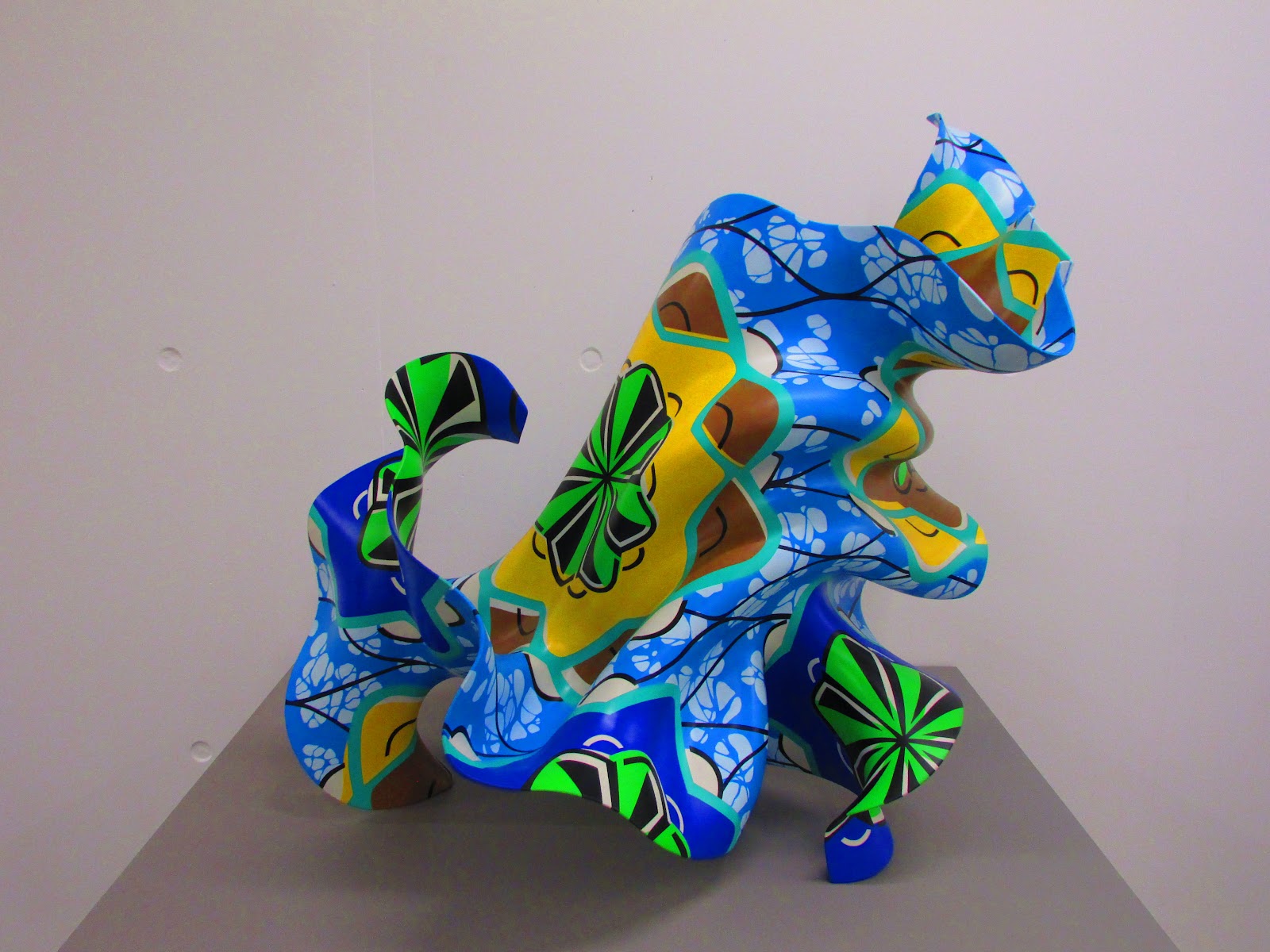
In the lower ground floor gallery space at Goodman is the work of Viha Galhotra. Galhotra is another artist who has chosen to employ paper, specifically the very versatile Korean Hanji variety of paper (featured in a previous post here), as an important part of her oeuvre. This is the artists' first London exhibition, and her work expresses concerns about the state of the environment, and questions whether man really grasps the consequences of his actions during his lifetime upon the earth. Galhotra's Wounded Series features huge roundels of moulded Hanji paper whose planes have been disrupted whilst wet with a textural sequence of scrapings and physical mark-making giving them an appearance similar to clay and earthly/unearthly landscapes such as the photos one sees of the surface of the moon or planet Mars. These pieces certainly employ textures reminiscent of the scars and eruptions left on the earth's surfaces by our human behaviours. They also resemble oversized Petri dish specimens full of exotic laboratory grown cultures. I admired their scale, minimalism, absence of colour and reliance on texture. Other pieces here were large sculptures and an installation entitled Flow resembled a flow of lava or seeping of water, again indicative of the power of nature and her forces upon the planet. It is meant to evoke the flow of the sacred Yamuna river and how it has now become defiled with pollution. This installation was heavily studded with small bells from Galhotra's culture called ghungroos which are used in classical dance and come in brass and silver finishes adding to the illusion of rippling water. The sculptural element of Galhotra's came with the Beneath series in the form of metal stands on which stood rocks, and whose corresponding lower sections had also been studded with the tiny, shiny ghungroo bells making the lower rock surface look somehow 'alive' as if swarming with bees or other insects. An added bonus of my visit was seeing the pieces in the last two photographs by Yinka Shonibare and Faith Ringold also on display.
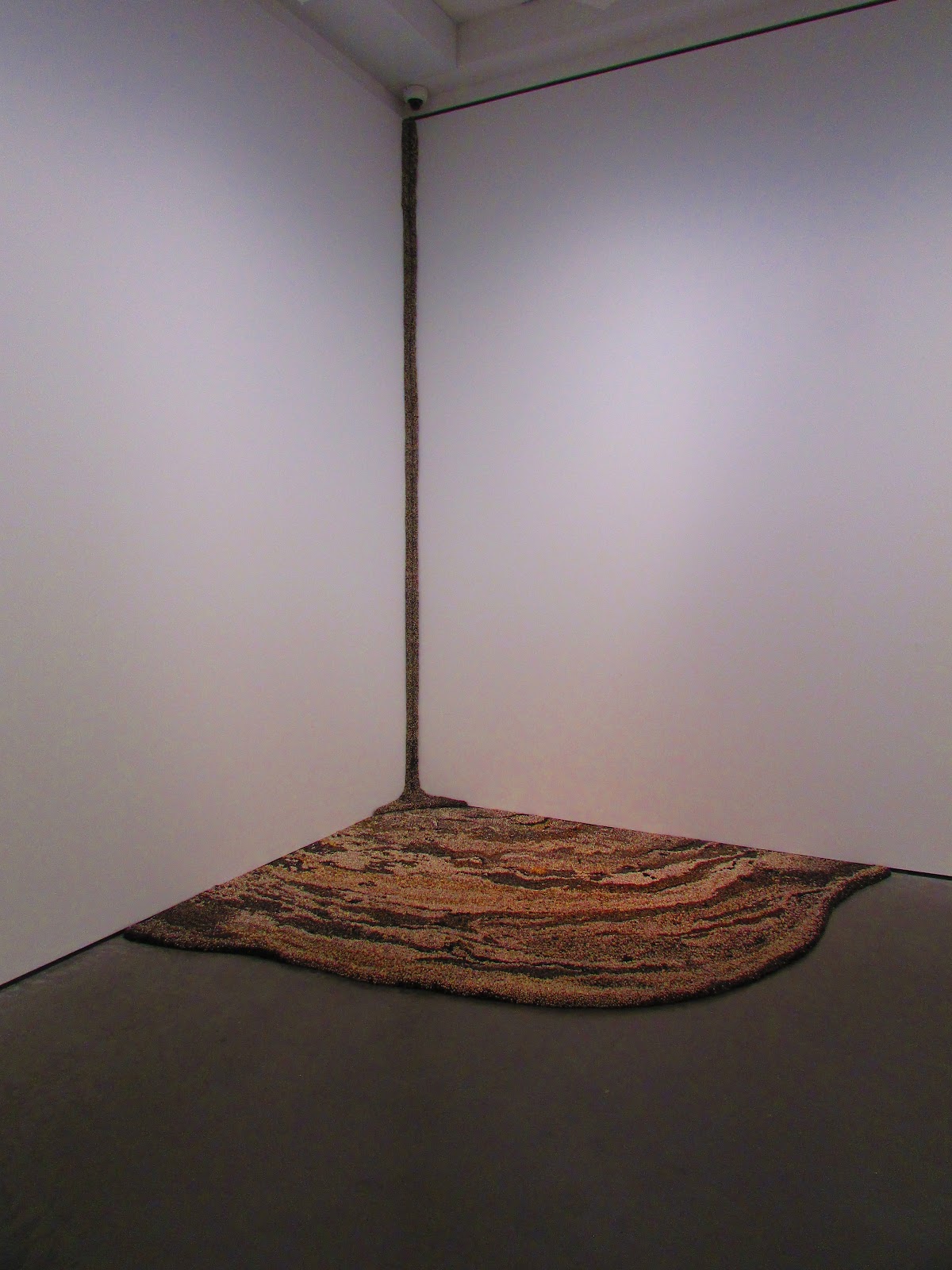
Flow
Flow
Wounded 1
Wounded 3
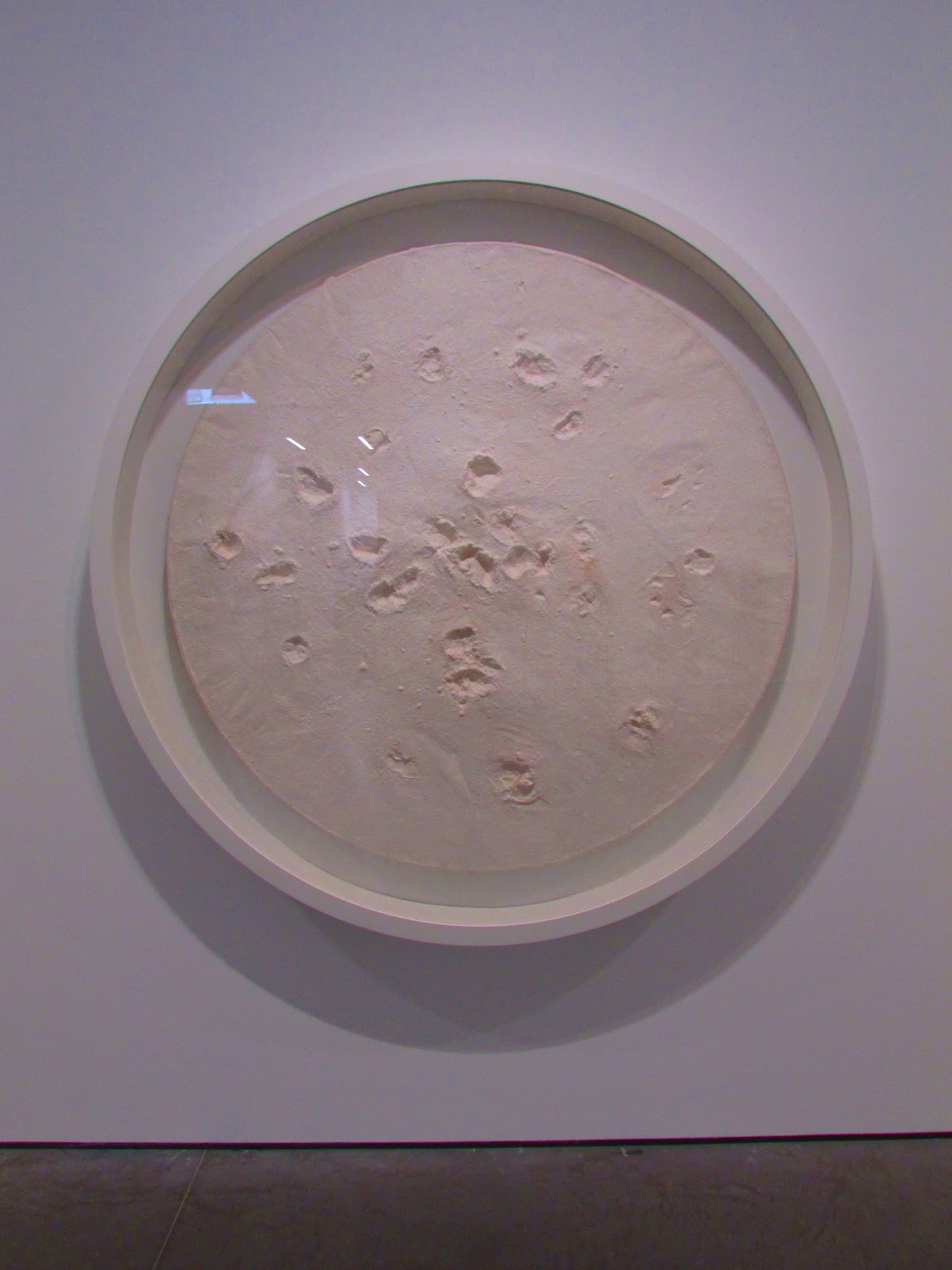
Wounded 4
Wounded 5
Untitled (Veil)Beneath Series
Beneath 1
Beneath 3Yinka Shonibare
Faith Ringold
Georgina Maxim: Telling Moments/Vibha Galhotra: Climactic Whispersuntil 14th September
Goodman Gallery
26 Cork Street
London
W1S